

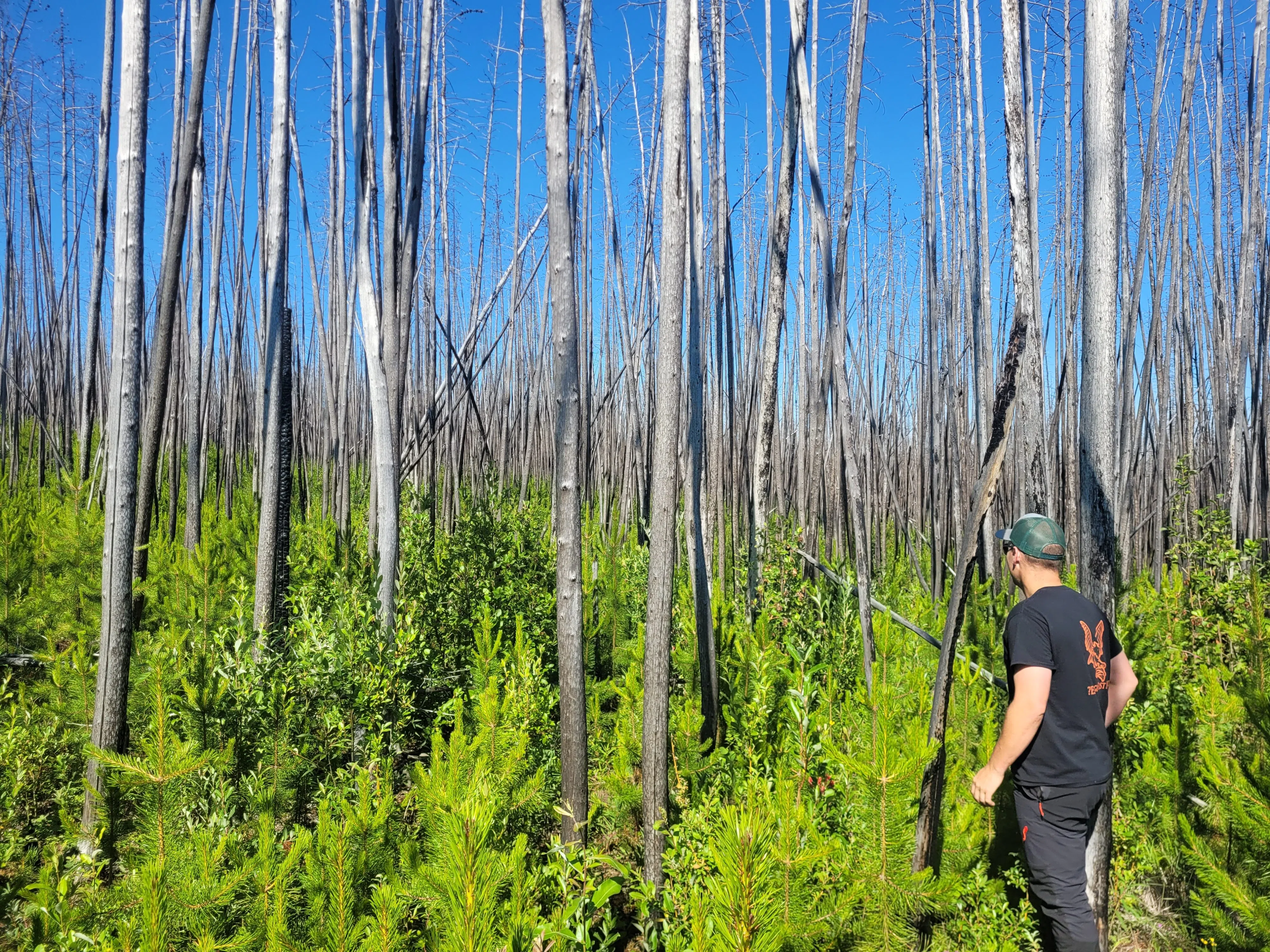
Central Chilcotin Rehabilitation Ltd. says it is making strong progress on its large-scale land rehabilitation project near Palmer Lake in the Cariboo Chilcotin, with early results showing positive outcomes for both the land and local communities.
The project focuses on restoring forest areas heavily damaged by catastrophic wildfires, many of which have been considered difficult to rehabilitate and left untreated for years. CCR says the work is already improving forest health and resilience while creating steady employment across remote First Nations communities in the region.
According to CCR’s Forestry Superintendent, Registered Professional Forester Daniel Persson, the project has delivered significant economic benefits. He says every dollar invested in the Palmer Lake project is generating roughly four dollars in return, flowing directly back into Indigenous employment and local communities. At a time when British Columbia’s forestry sector is facing uncertainty due to tariffs, limited wood supply, and mill curtailments, CCR says rehabilitation work is helping provide stable jobs.
The project also reduces future wildfire risk by removing and utilizing fire-killed trees. While burned, much of the wood fibre can still be used and is being shipped to pulp mills and bioenergy companies, supporting operations during a period of fibre scarcity.
CCR says the Palmer Lake project reflects a long-term commitment to healing the land and building resilient forests for future generations, while demonstrating the impact of Indigenous-led land stewardship.





Comments